

Deploying to Akamai Cloud (Linode) via DeployHQ: Automated VPS Deployment
Deploying your code or website to a server hosted on Akamai Cloud (formerly Linode) is straightforward with DeployHQ.
Linode was acquired by Akamai in 2022 and is now part of Akamai Connected Cloud. The Cloud Manager panel, SSH access, and server management remain largely the same — only the branding and documentation URLs have changed.
Firstly, you'll need to set up your DeployHQ project, then connect to your Akamai Cloud compute instance.
Setting up your project
Head to the Projects screen in DeployHQ, then click the New Project button to get started.
You'll be prompted to enter a name for your project, then select where your repository is hosted.
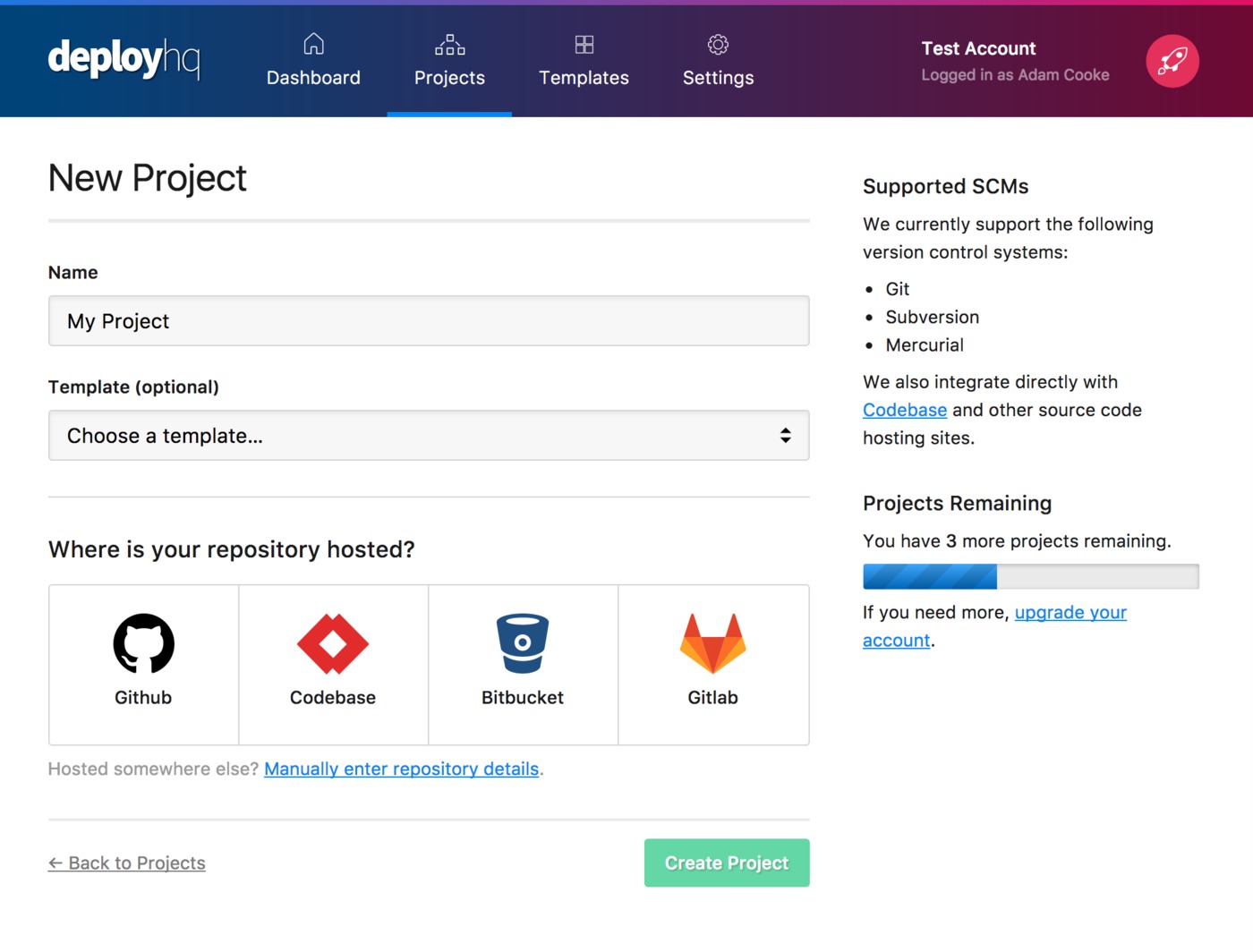
Next, click Create project and you'll be taken to a screen where you can log in with your repository hosting account to authorise access and then choose your repository.
- Adding a Bitbucket repository
- Adding a Codebase repository
- Adding a GitHub repository
- Adding a GitLab repository
- Adding a repository manually
Setting up your Akamai Cloud server
Once you've configured your repository, you'll need to connect to your compute instance.
As a prerequisite, make sure your instance's firewall allows connections from DeployHQ's IP addresses. You can configure firewall rules in the Cloud Manager under your instance's Network tab, or using Akamai's Cloud Firewall feature. For the list of IPs to allow, refer to our IP ranges article.
Once done, head to Servers & Groups in DeployHQ, and click the New Server button. If you've just added your repository, you will have been taken to this page automatically.
Start by entering a name and choosing SSH/SFTP as the protocol:
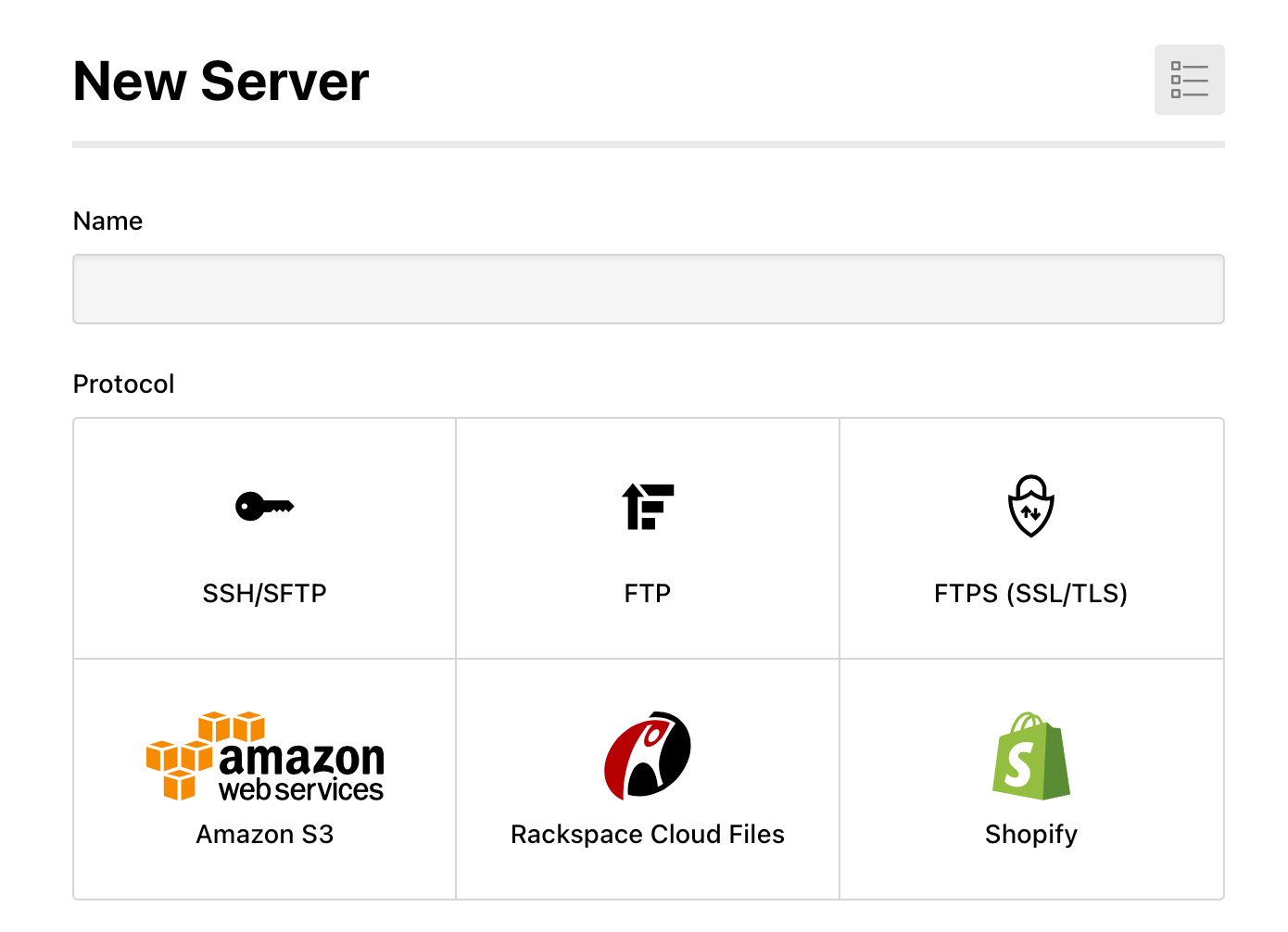
Before adding your server details in DeployHQ, you'll want to add DeployHQ's public SSH key to your compute instance. You can follow Akamai's SSH key guide to set this up. This allows DeployHQ to connect without a password.
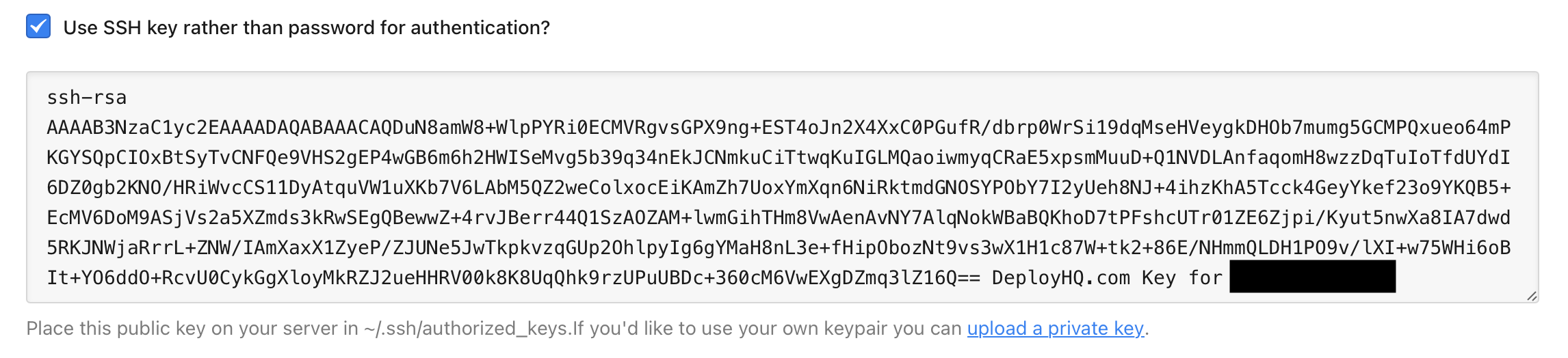
Next, enter your connection details in DeployHQ:
- Hostname: Your instance's IP address, found in the Cloud Manager under your instance's Network tab
- Username:
root(or the non-root user you created when securing your instance) - Port:
22(default)
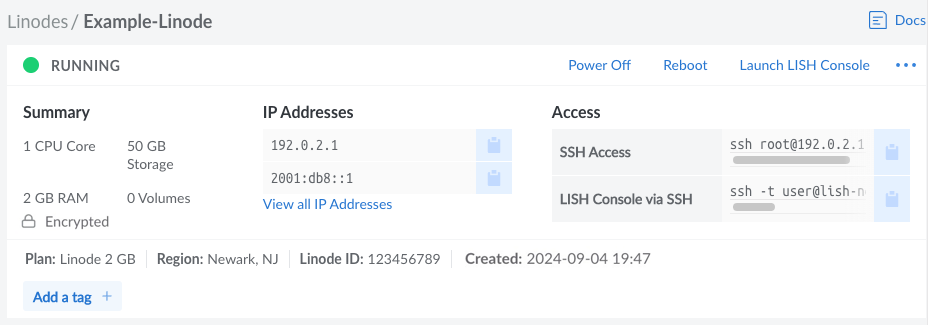
Then set the Deployment path — the directory on your server where files should be placed. Common paths include:
/var/www/html/for a standard web server/var/www/yourdomain.com/public/if you've set up virtual hosts- Your WordPress theme directory if deploying a theme
Under Deployment options, you can enable automatic deployments and optionally set a Deployment subdirectory if you only want to deploy files from a certain folder in your repository.
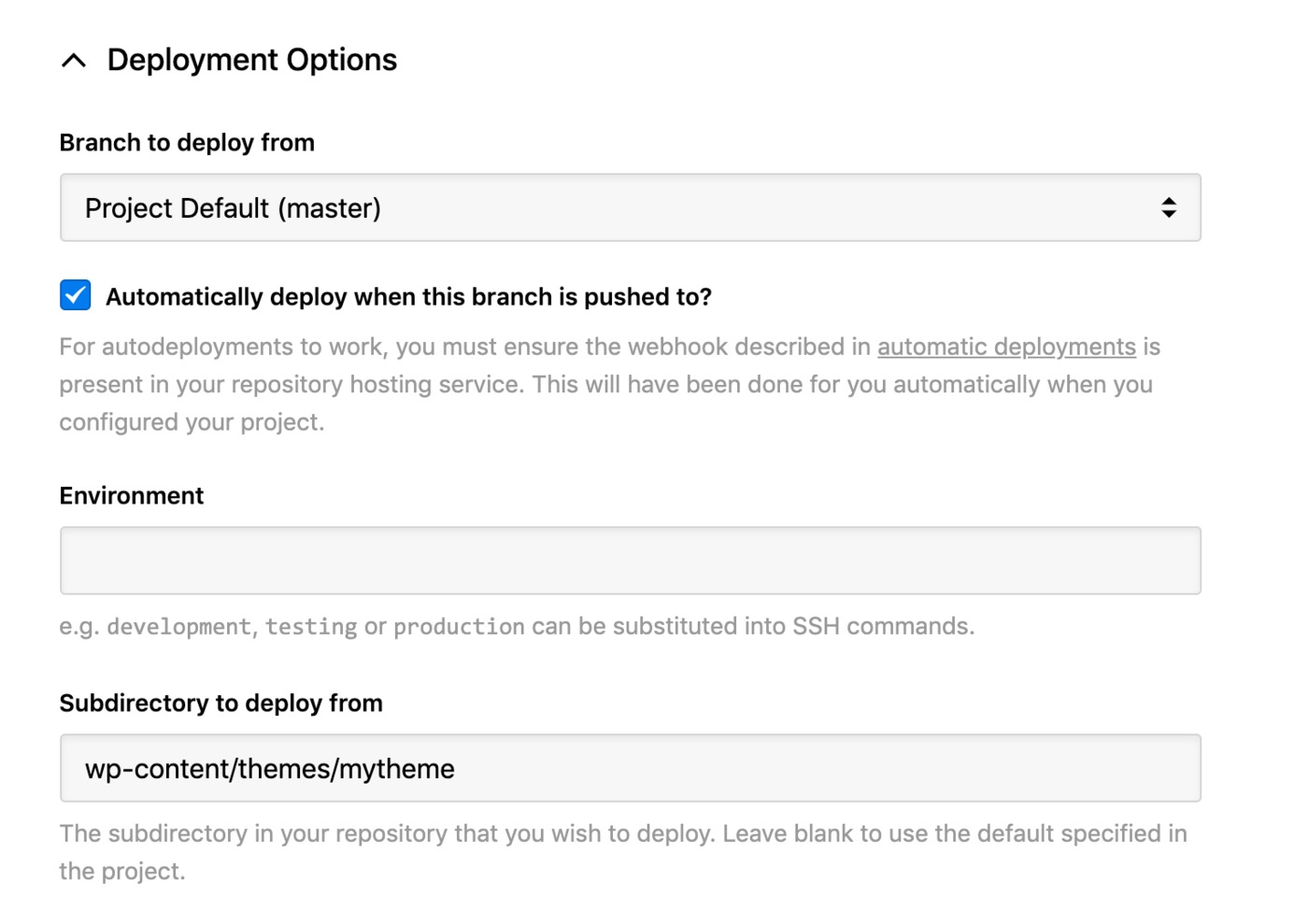
Click Create Server to save, then proceed to your first deployment.
Run your first deployment
By default, DeployHQ will upload your entire repository on the first deployment, since there's no previously deployed commit to compare against.
If your files are already on the server and up to date with the latest commit, you can skip that initial upload:
Otherwise, follow this guide to start your first deployment — after the first run, only changed files will be uploaded:
That's it! You've now set up automated deployments to your Akamai Cloud (Linode) compute instance.
Further reading
- Compile assets with the Build pipeline
- Run commands on your server with SSH commands
- Prevent certain files from uploading using Excluded files
- Keep sensitive config out of your repository using Config files
- Notify your team and integrate with other services via Integrations
Need help with your deployment? Check out our documentation or contact our support team for assistance.